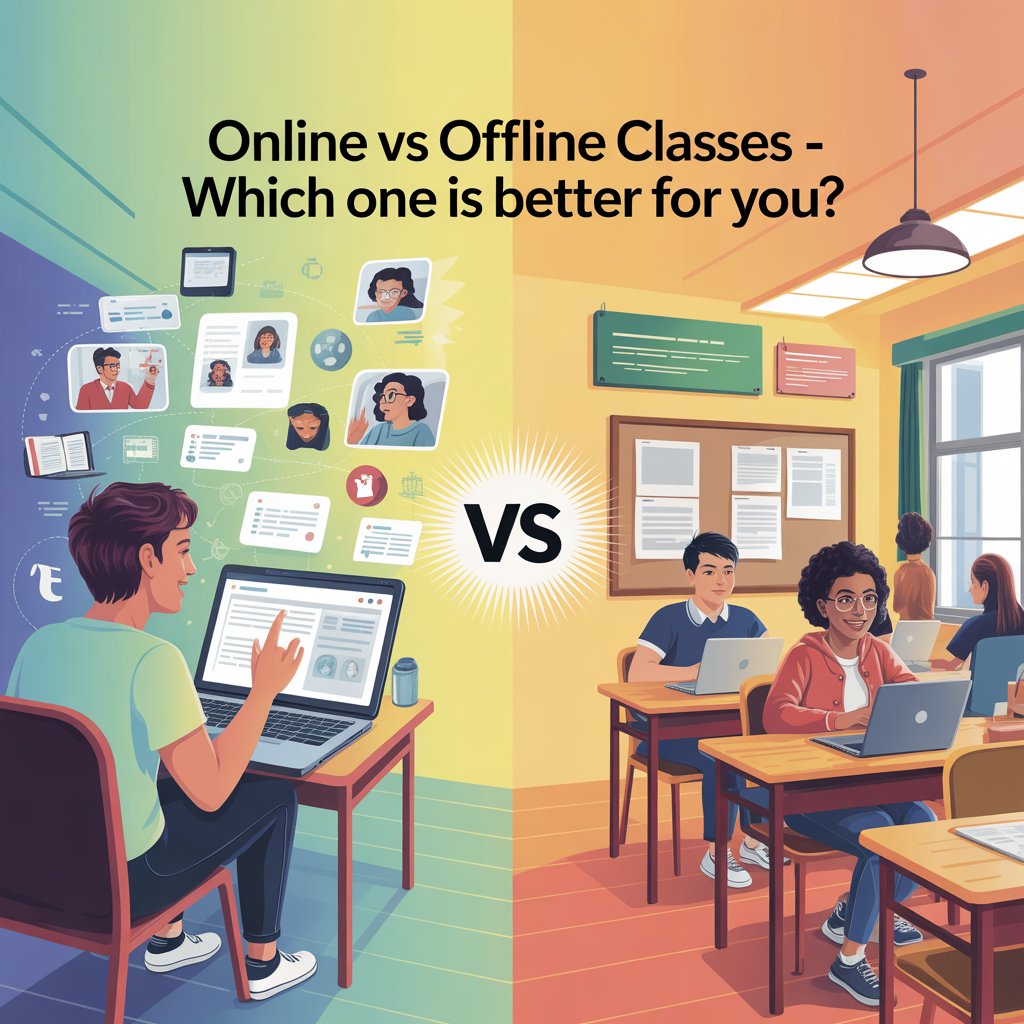
Online vs Offline Classes – Which One Is Better for You?
In today’s fast-changing education system, students and parents are often confused between online classes and offline classes. With the rise of digital learning platforms and remote education, the debate between online and offline learning has become more relevant than ever. So, which one is better for you? In this blog, we’ll explore the benefits, limitations, and differences between online and offline classes to help you decide the best learning method based on your goals, lifestyle, and preferences. What Are Online Classes? SEO Keyword: Benefits of online classes Online classes are conducted through the internet using laptops, tablets, or smartphones. Students attend live or recorded sessions, complete assignments online, and interact with teachers through video calls or discussion forums. Advantages of Online Classes: What Are Offline Classes? SEO Keyword: Advantages of offline learning Offline classes are traditional classroom sessions where students and teachers interact face-to-face. This method is followed in schools, colleges, coaching centers, and universities. Advantages of Offline Classes: Online vs Offline Classes – Key Differences Feature Online Classes Offline Classes Learning Style Self-paced and digital Classroom-based and structured Interaction Virtual, limited real-time Face-to-face with real-time feedback Flexibility High – learn from anywhere Low – fixed schedule and location Cost Often lower or free Can be expensive (fees, travel) Technology Use Requires internet and devices Minimal use of technology Discipline Self-discipline needed Teacher-led discipline Which One Is Better for You? SEO Keyword: Online vs offline education comparison The choice between online and offline classes depends on your learning goals, personal style, and daily routine. Here’s how to decide: Choose Online Classes if: Choose Offline Classes if: A Blended Approach – The Best of Both Worlds SEO Keyword: Blended learning benefits Many students today are choosing a blended learning model, which combines online study with offline support. For example, students attend live online classes during the week and meet tutors in person on weekends. Blended learning offers flexibility along with personal attention, helping students achieve better results. Final Thoughts Both online and offline classes have their strengths. The key is to choose the method that suits your learning style, schedule, and career goals. While online classes offer convenience and access to global content, offline classes provide structure, discipline, and deeper engagement. Remember, learning is effective only when you are consistent, motivated, and clear about your goals — no matter which mode you choose. Frequently Searched Keywords
Online vs Offline Classes – Which One Is Better for You? Read More »